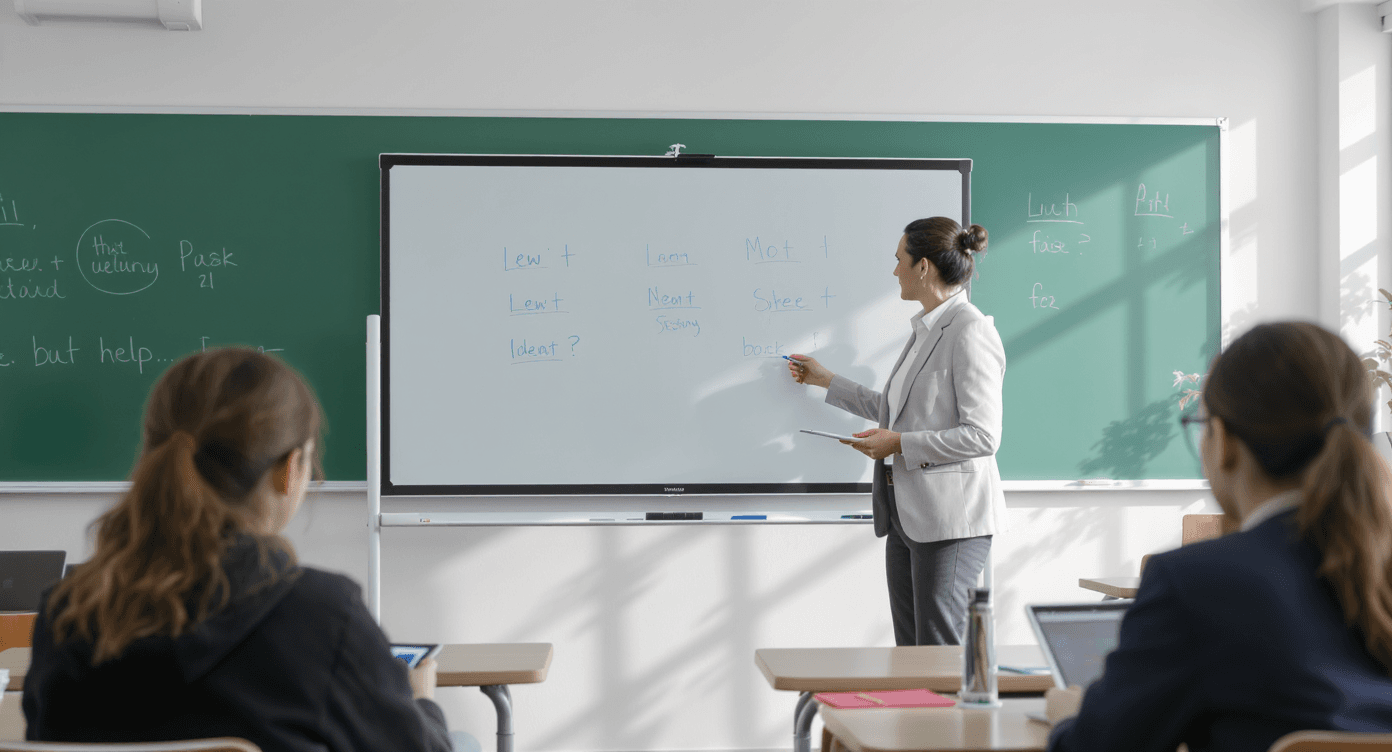
Transforming Language Education: The Interactive Whiteboard Advantage
The landscape of language education is rapidly evolving, with interactive whiteboards taking center stage in 2025-2026. As educators navigate trends like blended learning, AI integration, and the resurgence of in-person education, interactive whiteboards offer a dynamic way to enhance engagement, simplify lesson planning, and foster real-world language skills.
Interactive Whiteboards: A Gateway to Blended Learning
Interactive whiteboards are redefining how language lessons are conducted by merging traditional classroom feel with digital interactivity. These tools support a blended learning model, combining physical classroom dynamics with innovative digital resources. This setup caters to diverse learning styles and keeps learners actively engaged, bridging the gap between online and offline learning environments. Platforms like The Living Textbook empower educators to collaborate with students in real-time, creating a more impactful learning experience.
AI Integration: Enhancing Language Learning
AI is becoming a vital 'co-teacher' in language classrooms. With AI tools, educators can effortlessly plan differentiated lessons and provide instantaneous feedback on interactive whiteboards. LoLA, Loka's AI avatar, exemplifies these advancements by guiding language tutors in crafting tailored learning experiences through platforms like LINE messenger. By employing AI, educators can focus more on coaching students and less on administrative tasks.
Addressing Teacher Shortages with Scalable Solutions
Teacher shortages highlight the need for scalable technology like interactive whiteboards, which enable a single educator to manage large, diverse classes efficiently. This technology provides multilingual capabilities and adapts in real-time to students' needs. As HolonIQ suggests, integrating such EdTech solutions is crucial for handling the projected teacher hiring gap efficiently.
Practical Classroom Examples
Interactive whiteboards aren't just theoretical solutions; they have practical applications in various language teaching scenarios:
-
Independent Educators: Freelance language teachers use whiteboards to recycle lesson content, employ AI for lesson prep, and focus on student-centered production activities. This method aligns with the 'reuse over replace' trend, as seen in Mike's Home ESL.
-
Language Schools: With the in-person resurgence, schools adopt interactive whiteboards for Dogme-style lessons, emphasizing conversational learning over strict curricula. By combining multimedia resources, these schools significantly reduce online fatigue among adult learners.
-
Bilingual and Dual Language Programs: For K-12 environments, whiteboards support multimodal literacy, accommodating the growing number of English learners. They enable interactive, multimedia lesson plans that capture students' interest and facilitate real-world skill acquisition.
Navigating the Challenges
While the integration of interactive whiteboards promises numerous benefits, educators may face challenges, such as tech overload or adapting these tools to diverse classrooms. Here's how interactive whiteboards offer solutions:
-
Diverse Student Bodies: Whiteboards facilitate multilingual courses and allow real-time adaptations, ensuring all students remain engaged regardless of their background.
-
Tech Overload: By simplifying lesson materials into easily reusable formats, educators can overcome the overwhelming array of tools. According to TESOL resources, focusing on core tools like interactive whiteboards ensures productive language practice without burnout.
-
Improving Workplace Skills: Whiteboards simulate real-world scenarios, helping students develop communication skills critical beyond exams.
To explore more on utilizing interactive tools in language education, check out our articles on The Living Textbook Interactive Learning and Loka Creator Educator Tools.
FAQ
1. How do interactive whiteboards support language learning? Interactive whiteboards facilitate collaborative learning, allowing teachers and students to create content interactively. This technology supports real-time feedback, diverse multimedia integration, and fosters a collaborative learning environment which is essential for language acquisition.
2. What benefits do AI-powered assessments bring to language education? AI-powered assessments on interactive whiteboards, like those provided by Loka's LoLA, streamline lesson planning and offer personalized feedback. By enabling precise differentiation strategies, AI tools boost learner engagement and achievement, making them invaluable in language education.
3. How can I integrate AI and interactive whiteboards seamlessly in my teaching? To seamlessly integrate these technologies, start with structured plans that outline lesson objectives and incorporate AI for routine tasks like assessments and activity suggestions. Hands-on workshops and online resources can help educators get comfortable with these tools.
4. Are interactive whiteboards costly to implement in small language schools? Many interactive whiteboards, like those offered through Loka with Educator Seats starting at $6/month, are cost-effective. They are scalable solutions that can stretch your teaching capabilities while maintaining budget constraints.
5. Do interactive whiteboards replace traditional teaching methods? Rather than replacing traditional methods, interactive whiteboards augment them, offering enhanced engagement and flexibility. They complement existing techniques by incorporating digital resources and real-time feedback, making lessons more effective and engaging.