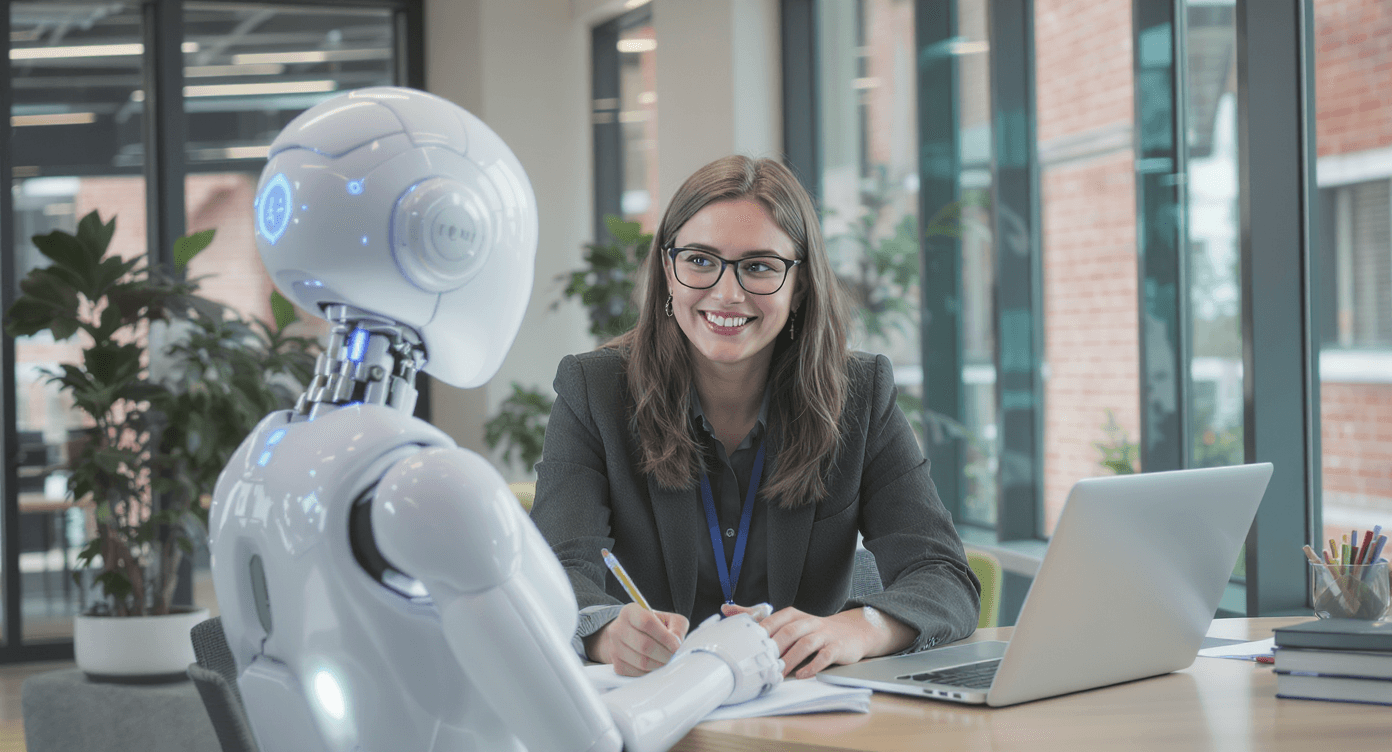
The Evolution of AI Language Teaching Assistants in 2026
In the rapidly transforming landscape of language education, AI language teaching assistants have become instrumental in creating a more personalized, micro-focused, and hybrid learning environment. By 2026, these assistants have significantly changed how language is taught and absorbed, addressing issues like information overload and the demand for immediate relevance.
Radical Personalization in Language Learning
AI's capability to analyze and adapt to an individual's learning history across multiple languages is a game-changer. Advanced systems now offer tailored pronunciation corrections, role-playing exercises, vocabulary drills, and even identify 'false friends' that might confound the learner. TESOL and others suggest that this level of personalization enhances the effectiveness of learning sessions, meeting specific learner needs like business vocabulary or context-specific phrases. Platforms like Duolingo and Loka leverage AI for these detailed customizations.
Embracing Micro-Lessons for Better Retention
The concept of micro-lessons—short, high-impact classes—fits seamlessly into busy schedules. Whether during a 15-minute commute or a 'language walk,' these sessions make learning a natural part of everyday life. This shift away from traditional, longer classes is evident in business models from platforms like italki, where learners benefit from focused, outcome-driven engagements.
Hybrid Models: The Best of Both Worlds
The synergy between AI's instructional prowess and human educators' capacity for empathy and mentorship fosters a balanced educational approach. Such hybrid models counteract screen fatigue and ensure that learners stay motivated and connected. As seen in the methods adopted by small schools in Warsaw, combining offline sessions with AI-driven aides effectively maintains human interaction's critical role in education.
The Rise of Purpose-Driven Learning
In an era where time is a precious commodity, purpose-driven learning ensures every learned phrase and principal has immediate applicability, whether it's in everyday exchange or business-specific scenarios. AI's adaptive content strategically tailors lessons to these specific needs, enhancing relevance and immediate utility.
Challenges and Solutions for Educators
One significant challenge faced by educators is the risk of learner isolation and diminishing motivation, as automated content can sometimes reduce the perceived necessity to actively engage in learning. Hybrid models can mitigate this by employing AI for routine tasks while educators focus on maintaining a vibrant learning community through conversation and personal interaction.
Bringing Conversations into the Curriculum
Loka's innovative platforms, such as the Living Textbook and The Learning Loop, empower educators to turn everyday conversations into substantial learning content. Not only does this approach cultivate a curriculum deeply rooted in real-world dialogues, but it also uses LoLA (AI Avatar) to provide personalized coaching through accessible platforms like LINE messenger.
Emphasizing Soft Skills and Multimodal Learning
Incorporating soft skills and trauma-aware pedagogy within language education reinforces the human element amid advanced AI technology. Multimodal tools allow for a more engaging learning experience, presenting lessons in formats that align with modern digital consumption habits and preferences.
Real-World Applications in Language Schools
Consider the case of a small Polish independent school that has leveraged micro-lesson and hybrid methods to great effect, offering language students the opportunity to partake in brief sessions complemented by leisurely 'language walks.' There's also Wall Street English's collaboration with HCLTech, which has blended AI tools with personalized business English training, proving invaluable for IT professionals.
Conclusion
Navigating the future of language education necessitates embracing these innovative approaches, especially for independent educators and small language school operators. Integrating AI technology responsibly and creatively turns potential challenges into powerful teaching avenues.
For more on AI in language education, explore our posts on AI Language Tutoring and LoLA AI Avatar Tutoring.
FAQs
How does AI impact personalized learning?
AI enables a degree of personalization previously unattainable in traditional education settings. By analyzing learner data, AI systems can provide tailored feedback on pronunciation, vocabulary, and grammar, meeting each learner's unique needs. This approach ensures that lessons are relevant to individual goals, whether for business language or regional dialects. The result is a more engaging and effective learning experience, making the process efficient and rewarding.
What are micro-lessons, and why are they effective?
Micro-lessons are short, focused learning sessions designed to fit into busy schedules. These sessions, typically 15 to 30 minutes long, are highly concentrated and goal-oriented, fitting seamlessly into daily life such as during commutes or breaks. Their effectiveness lies in maintaining learner engagement and focus, delivering information in manageable chunks that promote better retention compared to longer, less concentrated lessons.
What benefits do hybrid learning models offer language educators?
Hybrid learning models blend AI automation with human teaching, balancing efficiency with empathy. AI handles routine tasks like assessments and repetitive drills, freeing educators to focus on mentoring and interpersonal communication. This model reduces screen fatigue and ensures learning remains dynamic and human-centered, crucial for maintaining motivation and connection.
Can AI replace teachers in language education?
While AI can efficiently handle many tasks traditionally performed by teachers, it cannot fully replace the human element crucial in fostering emotional and personal growth aspects of education. Educators bring insights, mentorship, and personal interaction that AI cannot replicate, making them indispensable in a well-rounded educational environment where AI is an augmentative tool rather than a replacement.
How are conversations used as learning content?
Using conversations as foundational learning elements transforms passive dialogue into interactive curriculum content. This method, exemplified by Loka's Learning Loop, recycles language from conversations into spaced repetition systems, turning real-world dialogue into a structured learning framework. It emphasizes comprehension and retention through contextualized practice, bridging the gap between theoretical knowledge and practical application.
For more insights on AI-powered language education, check out our article on AI-Powered Language Assessment.